Why Straw, Stalks, and Husks Slow Down Industrial Composting
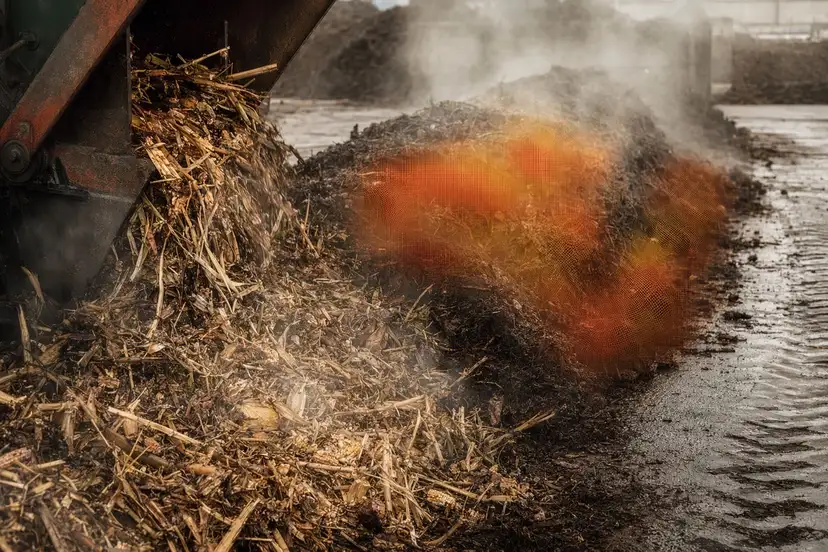
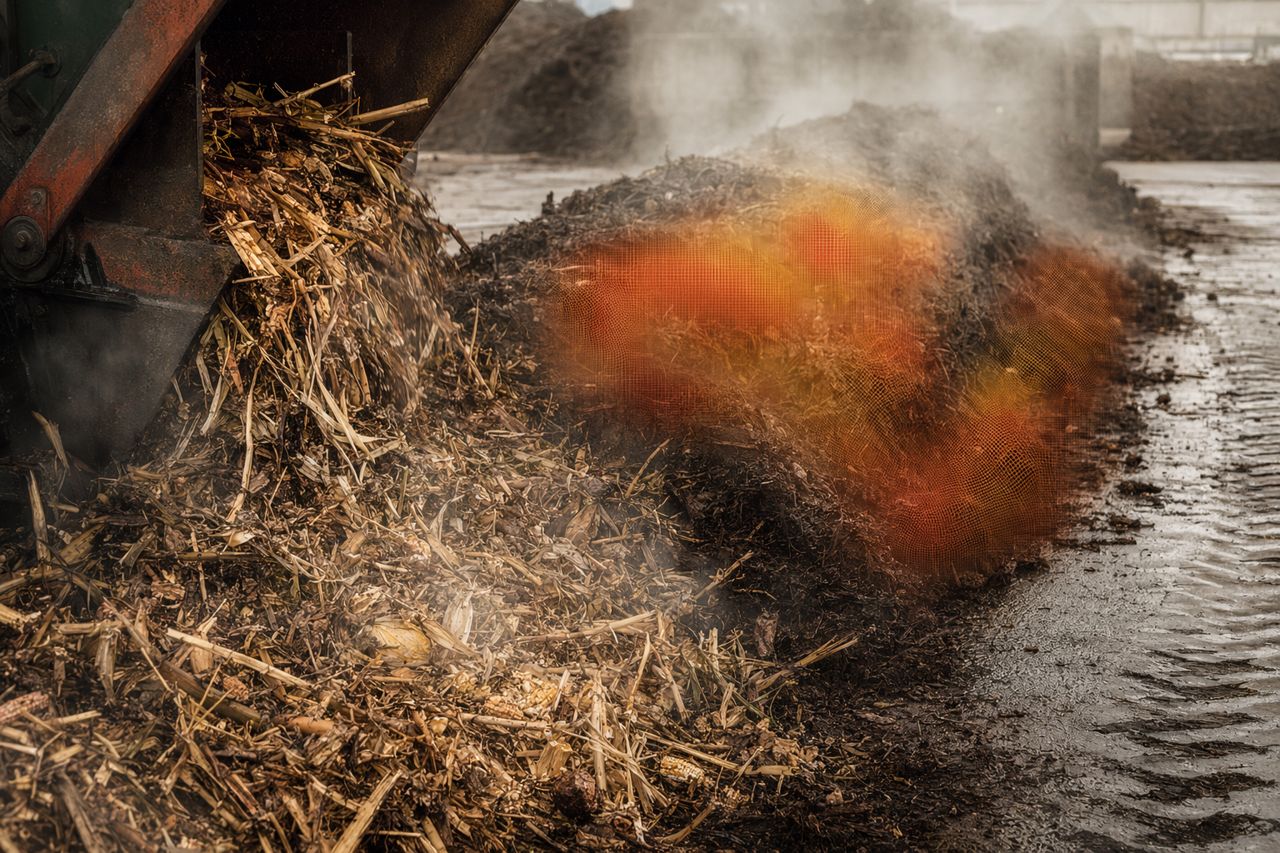
Crop residues look simple on the tipping floor: straw, corn stalks, husks, leaves, vines, shells, and other dry plant materials. In the pile, they behave differently.
They can resist wetting, hold structure too long, trap air pockets, shed moisture, and slow the release of usable carbon. For a composting facility, that means longer active processing, less predictable heat, more turning pressure, and a finished product that may need additional curing before it meets quality expectations.
LoamForge works as a compost enzyme supplier for organic waste processing with a practical focus: help facilities manage difficult plant-rich feedstocks without turning the operation into a lab project.
The real bottleneck: crop residues are built to resist breakdown
Straw, stalks, husks, and shells are not just “brown material.” They are structural plant materials built for strength, water control, and field durability.
Common operating problems include:
- Slow wet-in: dry waxy surfaces can repel water and create uneven moisture zones.
- High structure retention: stalks and husks can hold shape deep into the active phase.
- Delayed heat response: microbial access is limited until particle surfaces soften and open.
- Uneven pile biology: some zones heat hard while others remain underactive.
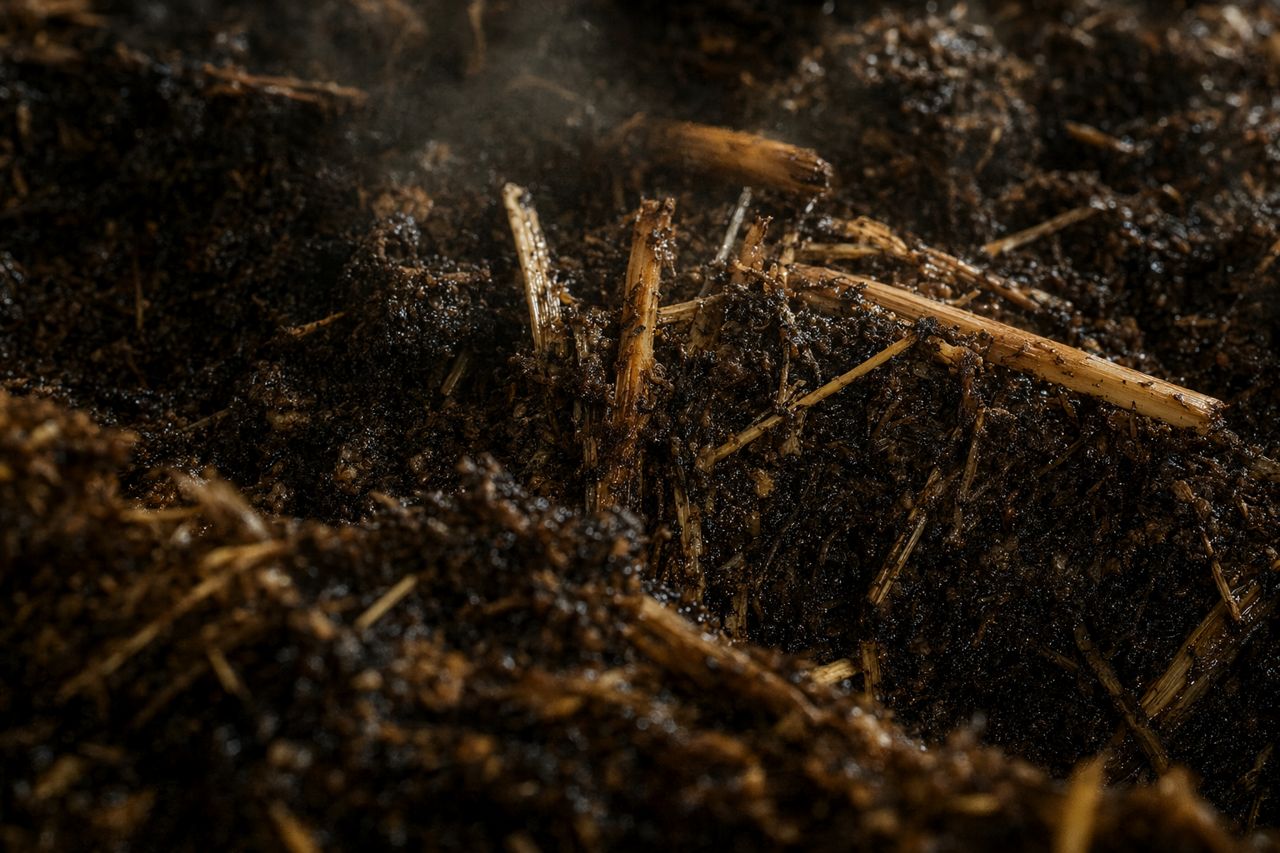
- Longer screening burden: recognizable fibers and flakes remain late in the process.
- Feedstock variability: one incoming load may compost cleanly while the next resists breakdown.
For facility managers, the issue is not theory. It shows up as pad time, rework, odor pressure, and inconsistent finished compost texture.
Why grinding and turning help, but do not solve everything
Size reduction improves surface area. Turning improves oxygen distribution. Moisture correction helps bring biology back into range.
But crop residues can still resist processing when:
- the surface remains difficult to wet,
- fibers stay locked in large bundles,
- moisture moves around the particle instead of into it,
- the pile heats unevenly,
- or the incoming material contains a heavy share of stalks, straw, husks, shells, or woody stems.
Mechanical action opens the door. Enzyme support can help the biology move through it faster and more evenly.
Where compost enzymes fit in the process
LoamForge enzyme solutions are designed to support microbial access to organic material already present in the pile. The goal is not to replace good composting practice. The goal is to make tough feedstocks more workable inside an existing operation.
For crop-residue-heavy blends, enzyme support can help with:
Faster surface conditioning
Targeted enzyme systems help condition plant particles so moisture and microbial activity can move into the material more consistently.
More consistent active heat
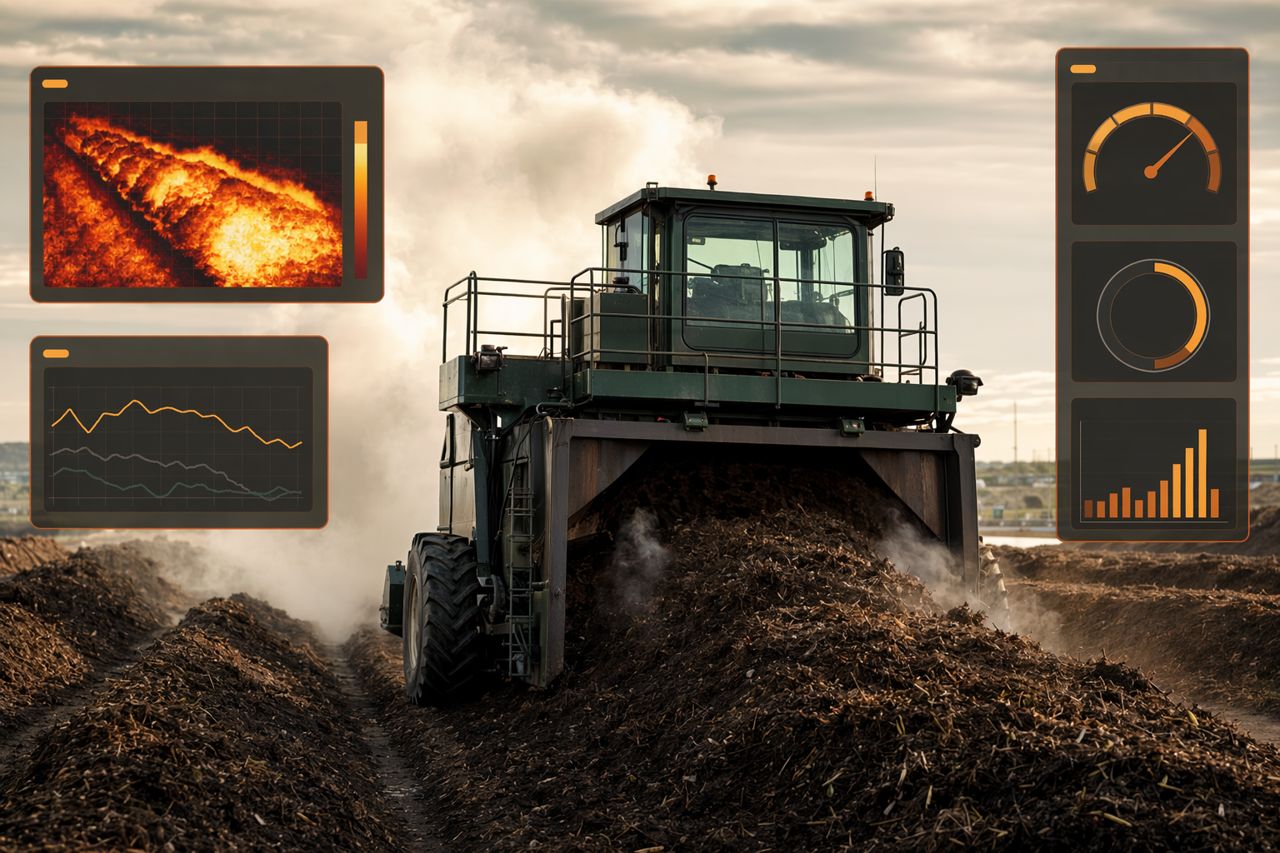
When accessible carbon is released more evenly, piles can maintain a more stable biological response instead of swinging between hot pockets and cold zones.
Better handling of variable loads
Facilities rarely receive perfect feedstock. Enzyme treatment can support more predictable processing when residue type, dryness, chop size, or contamination level changes from load to load.
Reduced late-stage visible fiber
By supporting earlier breakdown of plant structures, facilities can reduce the amount of stubborn residue that carries into screening, curing, or final product presentation.
Typical crop-residue challenges by material
Straw
Straw is lightweight, dry, and resistant to wetting. It can create loft and air channels, but it may also stay visually intact longer than expected. In high-straw blends, the operating challenge is often moisture contact and steady biological engagement.
Corn stalks
Stalks bring bulk and structure. They can be useful for porosity, but large or tough pieces may slow finished compost uniformity. Enzyme support is often used to improve early conditioning after grinding, mixing, and wetting.
Husks and leaves
Husks and dry leaves can mat, shed water, or clump depending on moisture and particle size. Uneven distribution can create inconsistent heat and handling behavior.
Shells, stems, and vines
These materials vary widely. Some break down readily after proper preparation. Others remain fibrous and visually persistent. Enzyme selection should match the incoming material profile and facility process window.
What LoamForge looks at before recommending an enzyme approach
A compost enzyme program should be tied to operating reality. LoamForge reviews the site conditions that matter to throughput and finished quality, including:
- feedstock mix and seasonal residue swings,
- incoming moisture behavior,
- grinding or shredding setup,
- windrow, static pile, or in-vessel process design,
- turning or aeration schedule,
- active-phase temperature pattern,
- odor events and pile recovery time,
- curing time and screening rejects,
- finished compost texture and market requirement.
This keeps the recommendation practical. The right question is not “what enzyme is strongest?” The right question is “what helps this facility move this feedstock through the process with better control?”
Operational signs that enzyme support may be worth testing
Consider a LoamForge evaluation if your facility sees:
- crop residue loads that extend active composting time,
- windrows with uneven heat across the same batch,
- dry pockets that persist after watering and turning,
- high visible fiber at screening,
- odor pressure after mixing wet nitrogen-rich material with dry residues,
- frequent rework to meet finished compost appearance,
- or seasonal feedstock changes that disrupt a stable recipe.
The best use case is not a broken compost system. It is a working system that needs better control when plant-heavy materials slow the line.
How to trial compost enzymes without disrupting production
A good trial should be simple enough for the crew to run and structured enough for management to judge.
LoamForge typically recommends comparing treated and untreated material under similar feedstock, moisture, pile size, and turning conditions. The facility tracks practical indicators such as:
- heat development and consistency,
- odor pressure during early activity,
- ease of wetting and mixing,
- particle softening over time,
- screening performance,
- curing behavior,
- and finished compost appearance.
No complex lab workflow is required to start. The goal is operational evidence that your team can see in the pile, on the pad, and at the screen.
Composting is still process control
Enzymes are not a shortcut around moisture, oxygen, carbon-to-nitrogen balance, particle size, or pile management. They work best when the facility already has control over the basics.
That is why LoamForge positions enzyme treatment as a process aid, not a magic additive. The value is in helping tough organic material become more available to the composting biology you are already managing.
Talk to LoamForge about crop-residue composting
If straw, stalks, husks, shells, or other plant residues are slowing your operation, LoamForge can help evaluate where enzyme support fits into your process.
Use the on-site form to request a quote. Share your feedstock mix, processing method, and main bottleneck. LoamForge will respond with a practical recommendation built around throughput, odor pressure, heat consistency, and finished compost quality.