Food-Soiled Green Waste: Managing Fats, Proteins, Odor Risk, and Screen Quality
Food-soiled green waste can be a strong feedstock when it is controlled. It brings moisture, nitrogen, and degradable organics into the yard. It can also bring the problems that make a facility manager lose margin: greasy residues, protein-heavy fines, sour pockets, inconsistent heat, higher odor pressure, and more rejects at the screen.
LoamForge works as a compost enzyme supplier for organic waste processing where operators need more predictable biological breakdown without redesigning the floor. The target is practical: steadier piles, cleaner turns, fewer nuisance odor spikes, and finished compost that screens with less drag from partially decomposed contamination.
Why food-soiled green waste behaves differently
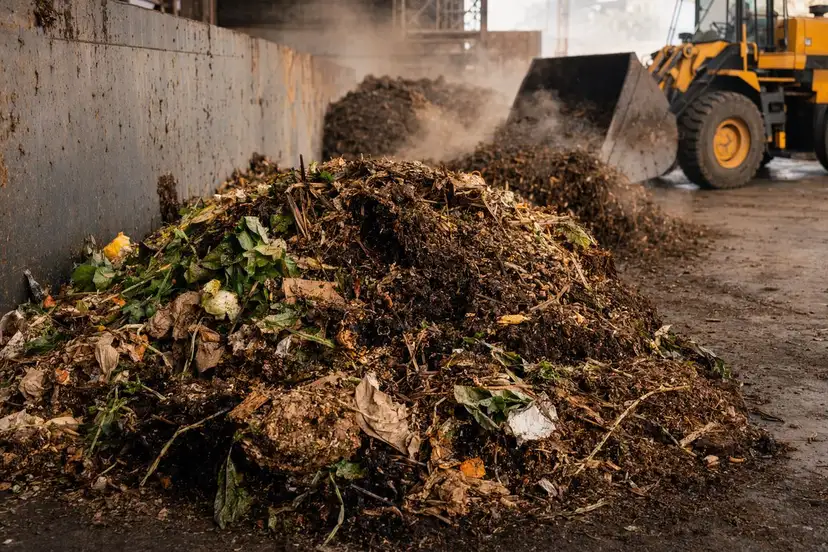
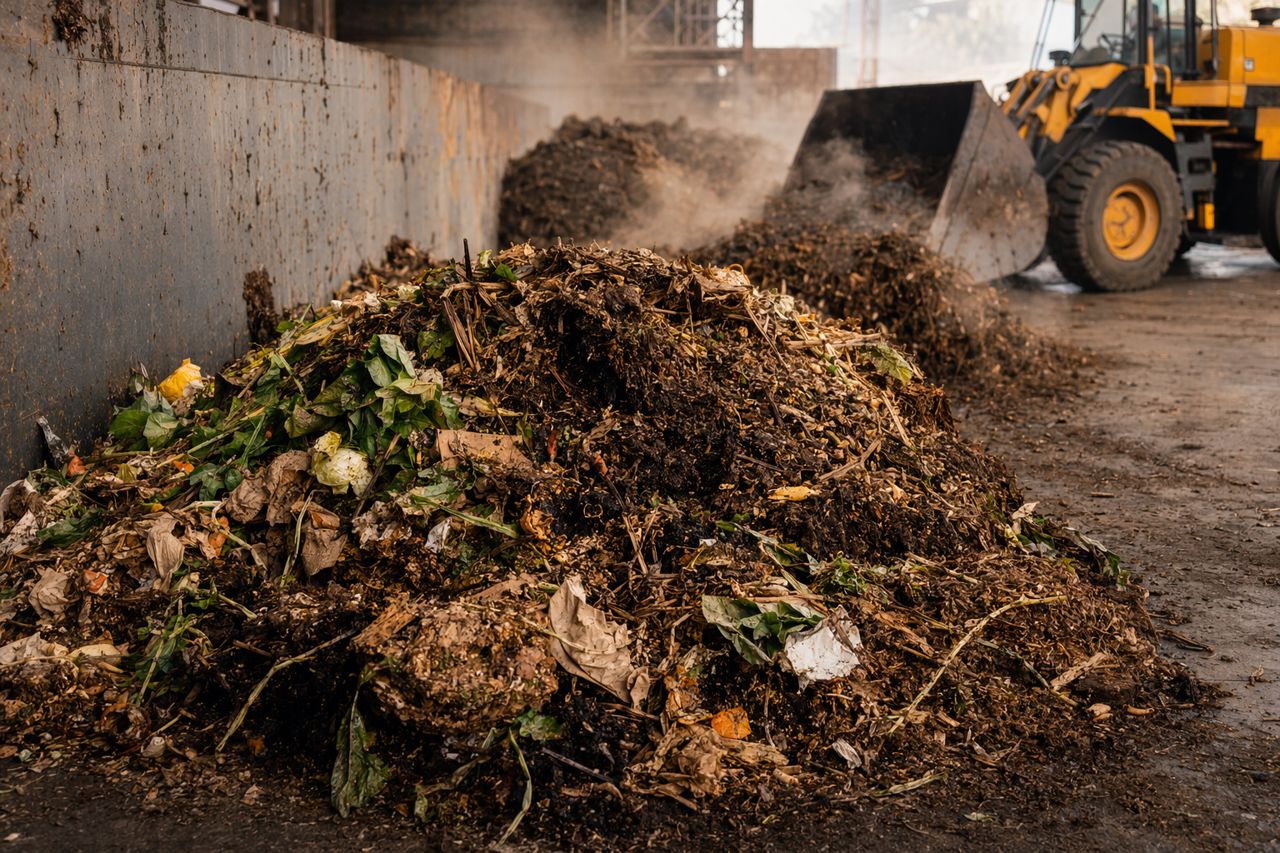
Clean green waste is usually woody, leafy, and fibrous. Food-soiled green waste is more variable. A single route can include grass clippings, paper fiber, spoiled produce, plate scrapings, sauces, dairy residue, meat trace, and fats absorbed into compostable packaging or yard material.
That variability changes the pile in five operational ways:
- Fats coat particles. Greasy films can slow moisture movement and make material clump instead of opening up during turning.
- Proteins drive odor risk. Protein-rich material can create sharp ammonia, sulfur, and putrefactive odor pressure when oxygen distribution falls behind biological demand.
- Moisture swings get sharper. Wet food residue can collapse pore space, while dry woody bulking material can stay under-conditioned.
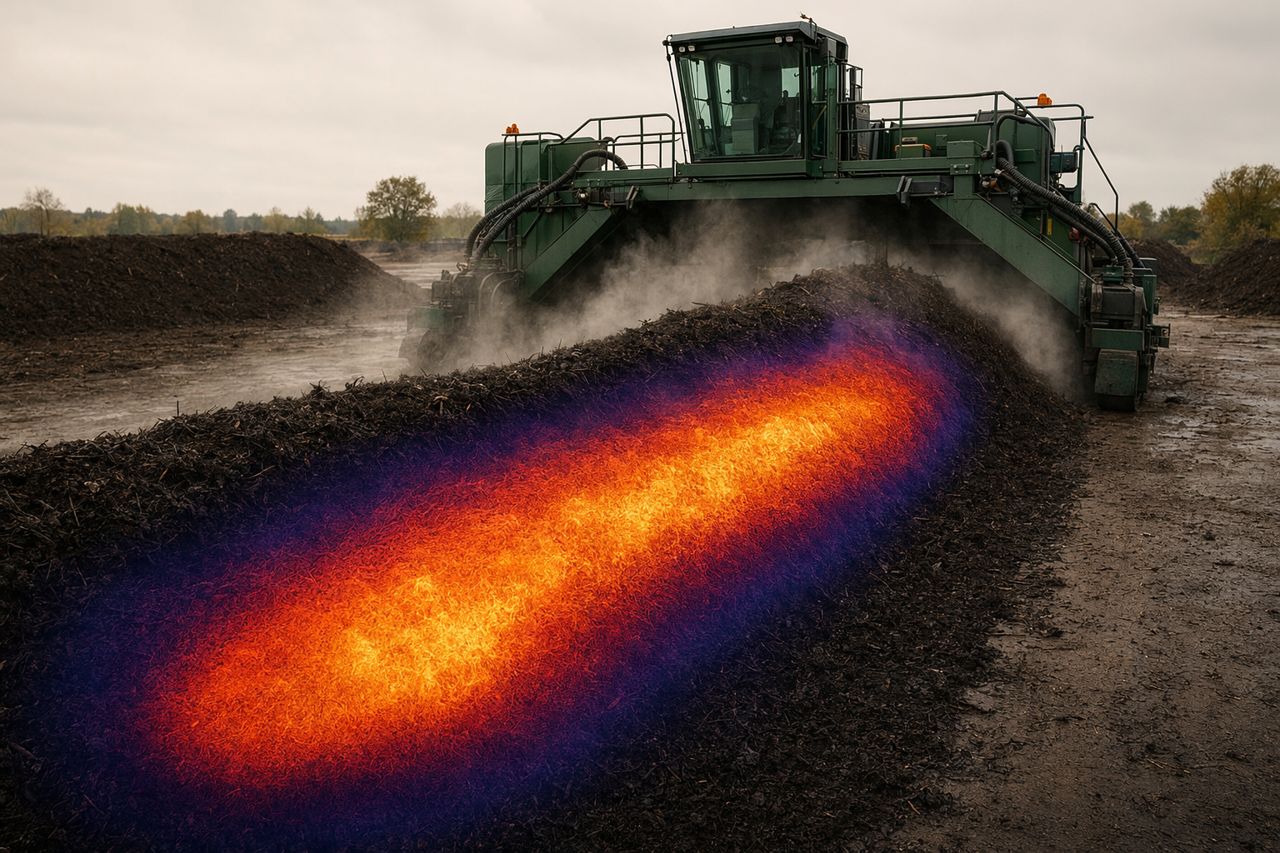
- Heat becomes less even. Hot cores and cold shoulders can develop in the same windrow, making process timing harder to trust.
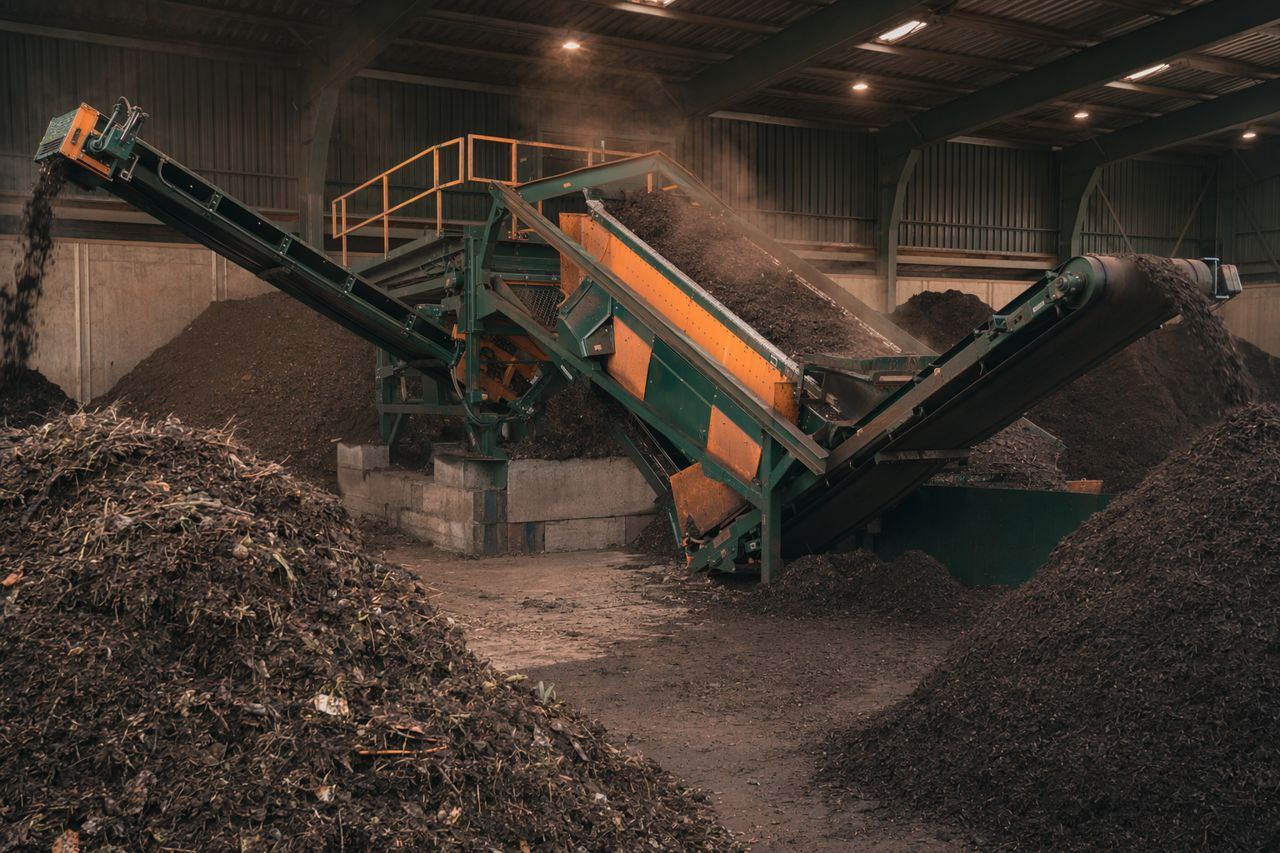
- Screen quality suffers. Greasy, fibrous, or under-processed pieces can carry through as overs, smears, or visible contamination in the finished product.
The contamination problem is not only visual
Many facilities treat contamination as a picking-line issue. That matters, but food-soiled green waste also creates a biological contamination issue. Fats and proteins change how microbes access the feedstock. If the material is not opened up quickly enough, the pile can shift from controlled composting to odor-generating breakdown in localized pockets.
Those pockets create downstream costs:
- More complaint risk near sensitive receptors
- Extra turning to chase uneven heat
- Slower release of greasy or protein-bound material
- Higher screen load from stubborn organics
- Less confidence in curing time and product uniformity
Where enzymes fit in the control strategy
Enzymes are not a replacement for good composting practice. Air, moisture, carbon balance, particle size, and turning discipline still decide the base performance of the pile.
The value of an enzyme program is that it helps make mixed organic material more accessible to the compost biology already working in the windrow. For food-soiled green waste, LoamForge programs are typically selected to support breakdown of:
- Grease and oily food residues
- Protein-rich fines and food particles
- Starch-heavy and soft organic residues
- Cellulose-rich green and paper fractions
- Mixed particles that need faster surface breakdown before screening
The facility outcome is not a lab claim. The outcome is a pile that behaves with fewer surprises.
Operational signals to watch
If food-soiled green waste is affecting your process, the signs usually show up before the screen deck.
At receiving
Watch for loads with visible grease, compacted bags of wet organics, strong sour odor, or high moisture attached to green material. These loads often need faster blending and better distribution across carbon-rich bulking material.
During active composting
Track whether windrows heat evenly after turning. A pile that shows hot streaks, cold edges, and persistent odor after aeration may have uneven biological access. Greasy or protein-heavy pockets can keep breaking down on their own schedule instead of the facility schedule.
Before screening
Look for smearing, sticky overs, fibrous clumps, and recognizable food-soiled fragments. These are signs that contamination was not only a front-end problem. It traveled through the process and became a finished-product quality issue.
Practical controls for fats and proteins
A stronger program usually combines physical handling with biological support.
- Blend early. Do not let wet food-soiled material sit in dense pockets before it reaches the pile.
- Protect structure. Use enough dry, porous carbon to keep air pathways open.
- Avoid grease concentration. Spread high-fat loads across a wider batch instead of loading them into one windrow section.
- Turn for exposure, not just mixing. The goal is to reopen surfaces and redistribute moisture, heat, and oxygen.
- Use enzyme support where variability is highest. Apply the program where fats, proteins, and soft residues are most likely to slow breakdown or raise odor pressure.
What better control can look like
For a composting facility, the business case is built around operating reliability. A facility-fit LoamForge enzyme program can support:
- More consistent heat development across mixed windrows
- Lower odor pressure from food-soiled and protein-heavy pockets
- Better breakdown of greasy and soft organic residues
- Improved handling texture before screening
- Fewer visible organics in overs and finished compost
- More confidence when accepting variable municipal, commercial, or institutional green waste streams
No enzyme supplier should promise to fix poor pile management. But when the basic process is sound and the feedstock mix is getting harder, enzyme support can give operators another control lever.
Buying considerations for facility managers
Before requesting a quote, gather the information that helps LoamForge size a practical program:
- Daily or weekly tonnage of food-soiled green waste
- Typical contamination profile: fats, proteins, compostable serviceware, paper fiber, produce, or mixed scraps
- Windrow, aerated static pile, or in-vessel process details
- Current pain points: odor, heat inconsistency, slow breakdown, screen rejects, or curing delays
- Application point options: receiving, blending, windrow build, turning, or moisture addition
- Seasonal swings in feedstock volume and moisture
The best program is the one that fits the way your floor already runs.
Request a quote
If food-soiled green waste is putting pressure on odor control, heat consistency, or screen quality, LoamForge can help evaluate an enzyme program for your facility.
Request a quote through the on-site contact form and include your feedstock mix, process type, and main operating constraint. We will respond with a practical starting point built for composting operations, not a generic chemical catalog.