Moisture Management in Industrial Composting: The Hidden Variable Behind Slow Breakdown
Industrial composting is not slowed by feedstock volume alone. It is often slowed by uneven moisture.
Too dry, and biology stalls. Too wet, and oxygen movement collapses. In both cases, the facility feels it fast: longer dwell time, odor pressure, inconsistent heat, more rework, and finished compost that misses the texture and stability operators expect.
For a composting facility handling changing organic waste streams, moisture is not a background condition. It is a control point. LoamForge works as a compost enzyme supplier for organic waste processing where facilities need better breakdown behavior, stronger process consistency, and practical support around feedstock variability.
Why moisture decides how fast a pile works
Compost breakdown depends on contact: microbes, enzymes, oxygen, organic particles, and available water all have to interact at the right pace.
When moisture sits in the workable range, particles soften, soluble compounds move, and microbial activity can keep producing steady heat. When moisture drifts outside that range, the pile may still look active from the outside, but the internal process becomes uneven.
Facility teams usually see the result before they see the cause:
- Hot zones next to cool pockets
- Sour or anaerobic odor after receiving wet feedstock
- Slow breakdown of fibrous material
- Clumping that resists turning
- Extra bulking agent use to recover structure
- Longer curing time before screening
- Finished compost with inconsistent particle condition
Moisture problems are rarely isolated. They connect directly to airflow, heat, turning strategy, carbon balance, and the way incoming material changes by season.
Too dry: heat loss, slow conversion, dusty handling
Dry windrows or aerated piles may look clean from a handling standpoint, but breakdown can become sluggish.
Common signs include:
- Piles that heat up briefly, then lose thermal momentum
- Outer layers drying faster than the core
- Woody, leafy, or fibrous particles remaining intact longer than planned
- Increased dust during turning, loading, or screening
- Compost that needs more residence time to reach target maturity
Dry conditions reduce biological contact. Organic particles may be present, oxygen may be available, and the mix may look structurally sound, but the active breakdown pathway is restricted.
For facilities pushing throughput, this matters. Slow conversion ties up pad space, increases loader movement, and can create scheduling pressure downstream.
Too wet: oxygen restriction, odor pressure, and unstable heat
Wet feedstock is common in industrial composting: food waste, biosolids blends, green waste after rain, dewatered organics, and seasonal loads with heavy moisture swings.
When moisture is excessive, air does not move evenly through the pile. Pore space closes. Anaerobic pockets build. Heat becomes unstable.
Typical facility impacts include:
- Stronger odor at receiving, mixing, or early active composting
- Dense clumps that do not open fully during turning
- Lower oxygen transfer through the pile
- More leachate management pressure
- More bulking material required to recover porosity
- Uneven stabilization between the pile core and edges
The issue is not only water content. It is water distribution. A pile can have dry edges and wet pockets at the same time. That unevenness makes operator decisions harder because one turn or one water addition may not correct the full profile.
The hidden cost of moisture variability
Moisture variability creates operational drag.
A facility manager may not log it as a single line item, but it shows up across the process:
- More turns to recover heat or odor control
- More pad space held by slow lots
- Higher dependence on bulking agents
- More screening rejects or overs
- Longer curing windows
- Increased complaints when wet pockets go anaerobic
- More labor time spent correcting piles instead of moving product
The facility does not need perfect moisture. It needs predictable moisture behavior inside a real-world process with imperfect feedstock.
That is where process support matters.
Where enzyme support fits in moisture-managed composting
Enzymes do not replace moisture control, aeration, carbon balance, or turning discipline. They help improve the way organic material becomes available for microbial conversion.
In practical facility terms, LoamForge enzyme solutions are used to support:
- Faster softening of target organic fractions
- Better breakdown of variable food, green, and agricultural residues
- More consistent biological response after mixing
- Reduced lag when incoming material changes
- Improved conversion of material that would otherwise persist into screening
- More stable active-phase performance when moisture is being managed closely
The value is operational. A facility is not buying a lab concept. It is buying support for throughput, heat consistency, odor pressure control, feedstock flexibility, and finished compost quality.
Moisture control points facility teams should watch
1. Receiving moisture by feedstock class
Track how each incoming stream behaves. Food residuals, yard waste, manure-based inputs, biosolids blends, and crop residues do not carry water the same way.
A practical receiving plan should flag:
- Loads that arrive wetter than usual
- Material that releases free water under loader pressure
- Seasonal swings after rain, freeze-thaw, or harvest cycles
- Streams that create dense clumps after mixing
This helps operators adjust bulking, mixing order, and enzyme application strategy before the pile becomes difficult to recover.
2. Initial mix structure
Moisture and structure must be managed together. A wet blend with enough open pore space can still perform. A wet blend that compacts will fight the process from day one.
Watch for:
- Mats of grass, leaves, paper, or food packaging residue
- Heavy sludge-like zones in the mix
- Uneven distribution of bulking material
- Loader bucket blending that looks uniform on the surface but leaves wet cores intact
A consistent initial mix gives biological activity a better start and makes enzyme support more effective.
3. Thermal pattern, not just peak temperature
A single high temperature reading does not prove the pile is working evenly. The pattern matters.
Look for:
- Fast heat rise followed by early collapse
- Persistent cool bands in the lower pile
- Overheated dry zones near the surface
- Heat that does not return after turning
- Different temperature behavior between similar lots
Thermal inconsistency often points back to uneven water distribution, oxygen restriction, or feedstock variability.
4. Odor response after turning
Turning should release trapped gases, reopen structure, and redistribute active material. If odor spikes remain strong or return quickly, wet anaerobic pockets may be driving the issue.
In that case, enzyme support should be paired with practical corrections: more structure, better mixing, adjusted pile geometry, and tighter receiving controls.
5. Screening feedback
The screen tells the truth about the active phase.
If overs remain high, fibers persist, or material texture varies across batches, moisture history may be part of the cause. Facilities should connect screening results back to feedstock type, pile moisture behavior, heat profile, and process adjustments.
How LoamForge approaches facility programs
LoamForge does not treat composting facilities like static recipes. A municipal green waste site, a food waste co-composting operation, and an organics recycler taking seasonal agricultural loads have different constraints.
Our approach focuses on the operating reality:
- What feedstocks arrive, and how much they vary
- Where the process slows down
- How moisture problems show up on the pad
- What odor pressure the facility is managing
- How turning, aeration, and curing are currently scheduled
- What finished compost standards the site must hit
From there, we support enzyme solution selection and use strategy around the facility goal: faster conversion, better process consistency, reduced rework, or improved finished material quality.
Practical signs your site may need enzyme support
Consider a LoamForge quote conversation if your facility is dealing with:
- Active composting cycles that routinely run longer than planned
- Wet organic streams that create odor pressure early in the process
- Fibrous or food-rich material persisting into screening
- Heat profiles that vary widely between similar piles
- Seasonal feedstock swings that disrupt process control
- More corrective turning than your labor plan allows
- Finished compost quality that changes from batch to batch
Enzyme support works best when paired with disciplined moisture management. It is not a shortcut around operations. It is a tool for making controlled operations more productive.
One-minute explainer: moisture as a control point
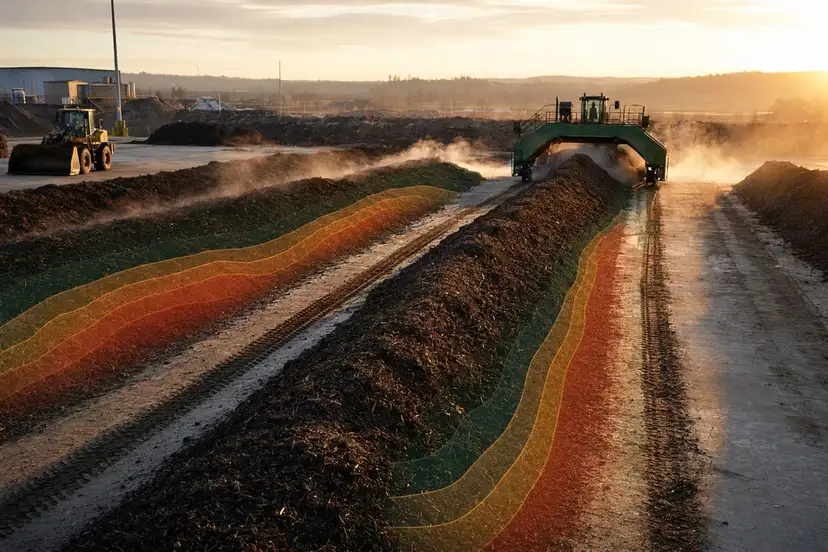
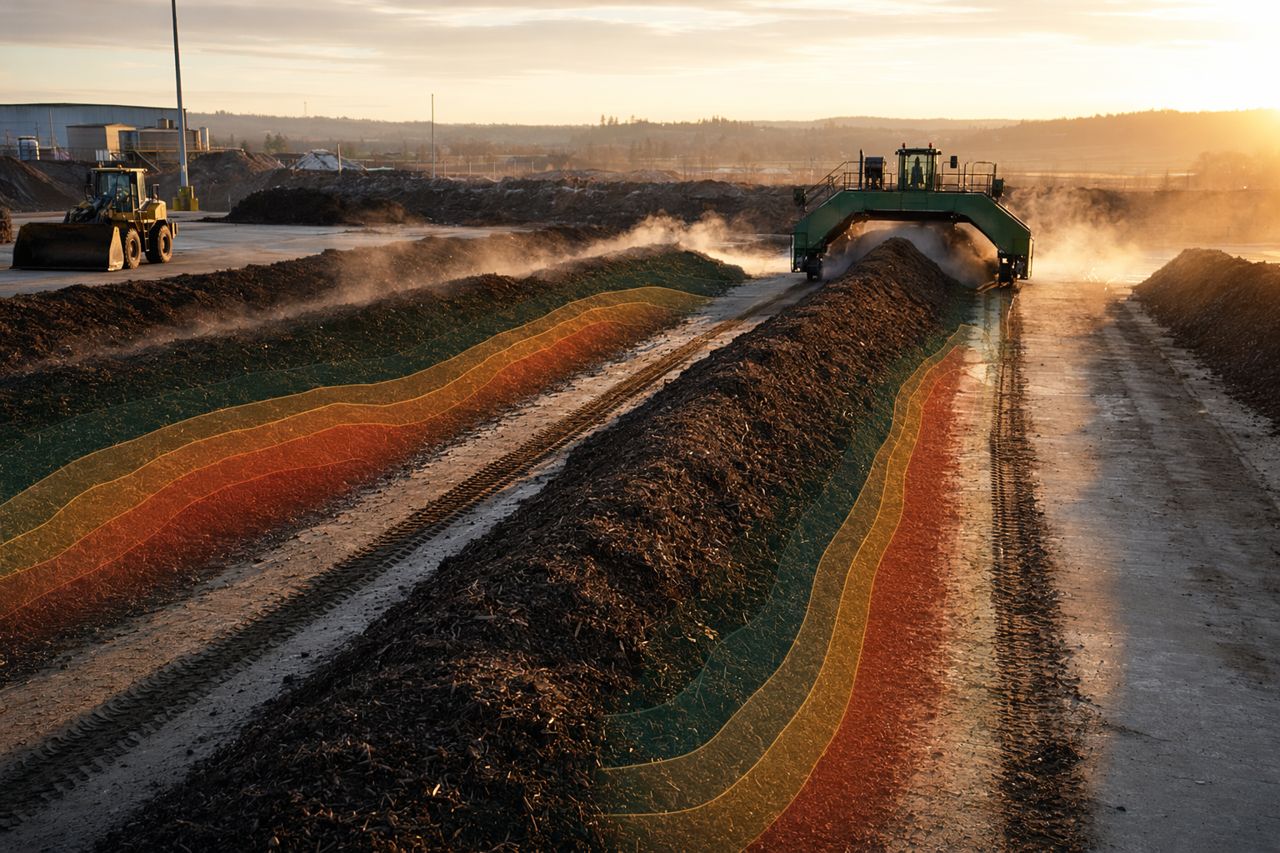
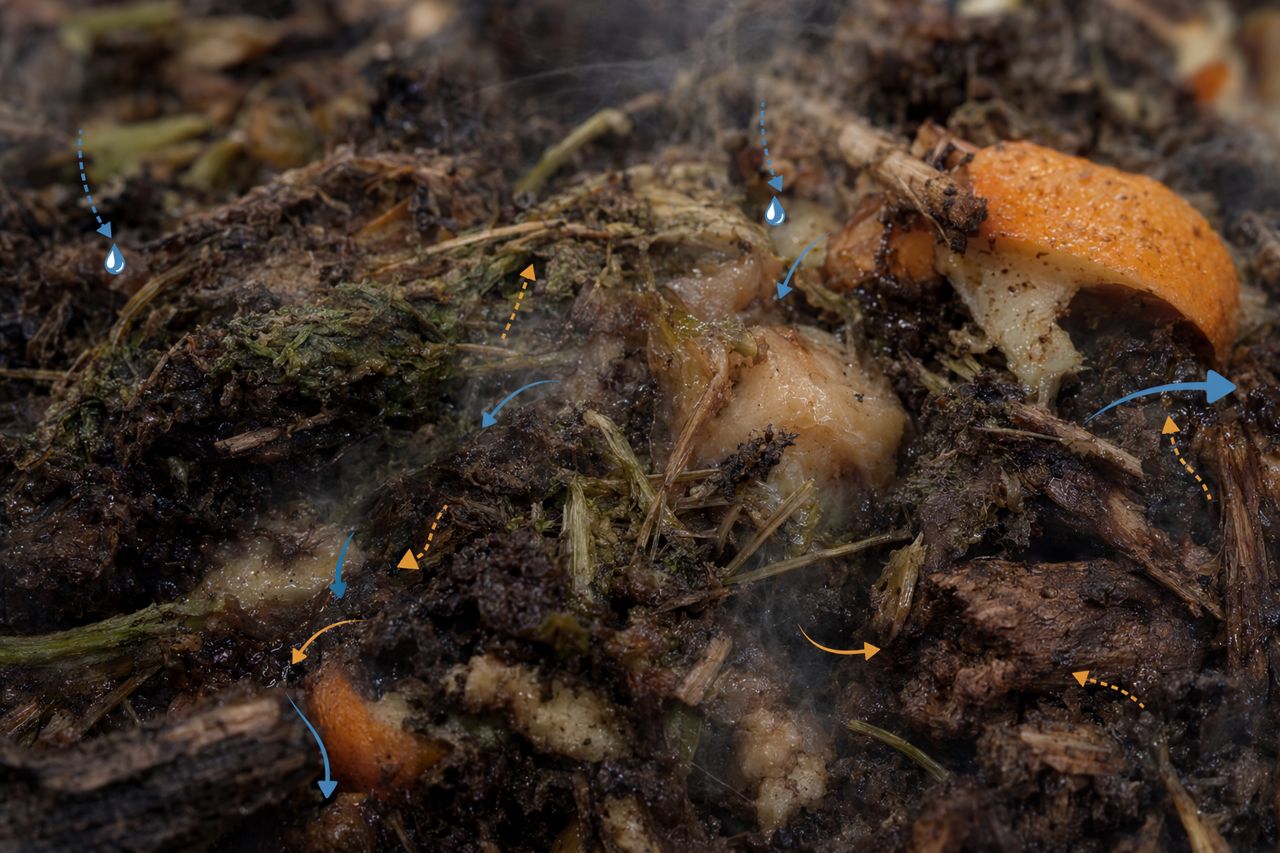
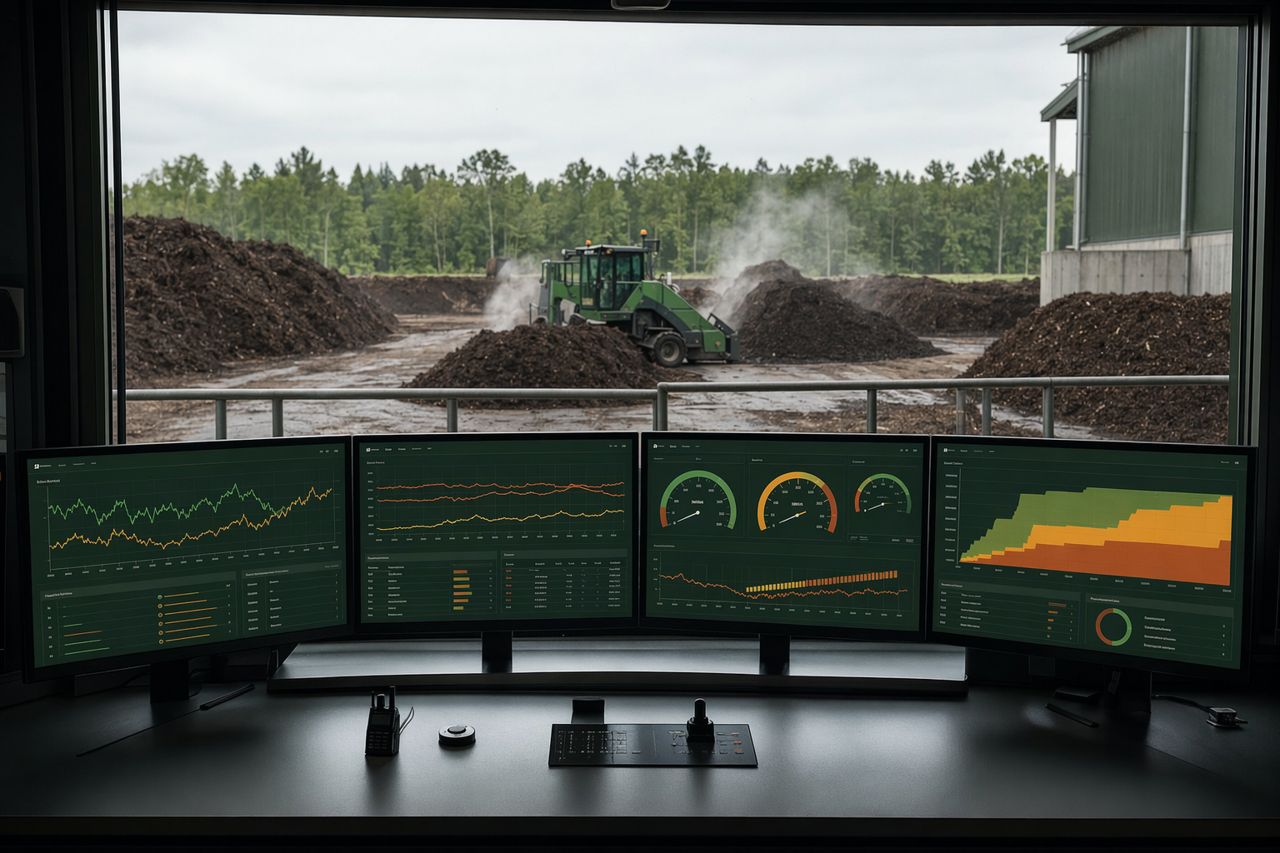
Embed the faceless LoamForge explainer video here. Visual direction: steaming windrows, loader movement, close particle-level breakdown, moisture and thermal overlays, and control-panel style subtitles. No presenter, no avatar.
Build a moisture-aware enzyme program
If moisture variability is slowing your active phase, increasing odor pressure, or creating inconsistent finished compost, LoamForge can help evaluate the right enzyme solution for your organic waste processing line.
Use the on-site request a quote form to share your feedstock mix, facility type, process goals, and current bottlenecks. We will respond with practical next steps for a facility-level quote.
Request a quote