Odor Complaints at Composting Sites: Process Causes Before Product Claims
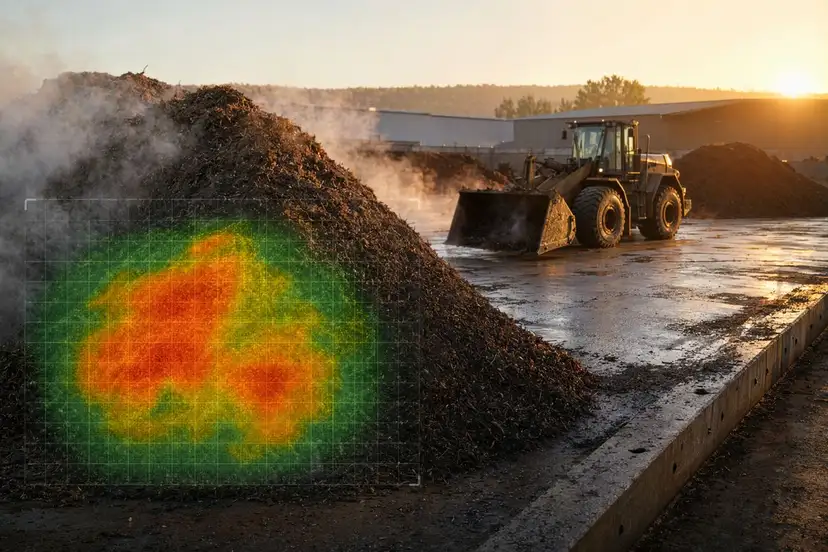
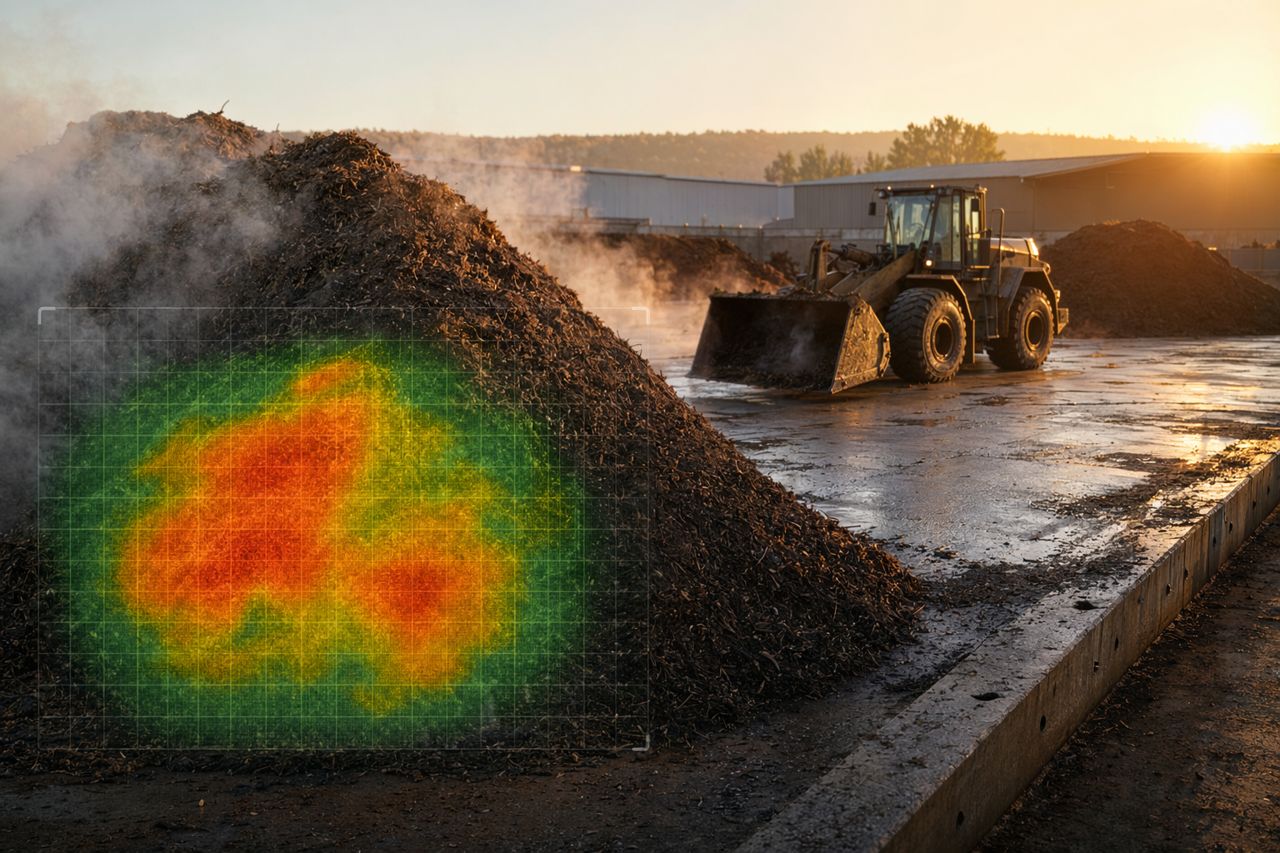
Odor complaints rarely come from one bad pile. They usually come from a chain of process conditions: wet pockets, oxygen-starved zones, inconsistent heat, overloaded recipes, delayed turning, or feedstock changes that were not absorbed by the operation.
For a composting facility, the priority is not to mask the odor. The priority is to regain control of the decomposition environment so odor pressure drops at the source.
LoamForge supports operators as a compost enzyme supplier for organic waste processing, but enzymes only make sense when they are tied to site outcomes: steadier breakdown, better feedstock handling, improved heat behavior, and cleaner finished compost. Product claims should not replace process discipline.
Start With the Odor Pattern, Not the Complaint Volume
Complaint volume can be misleading. A small process upset during the wrong wind direction can trigger more complaints than a larger issue on a still day. Before changing inputs, build a practical incident profile.
Track:
- Time of day complaints occur
- Weather, wind direction, and temperature
- Feedstock received in the prior 24 to 72 hours
- Pile age and location
- Turning, mixing, and watering activity
- Leachate or standing water conditions
- Odor character, if reported: sour, sulfur-like, ammonia-like, rotten, or solvent-like
The goal is to connect odor events to operating conditions. Once the pattern is visible, the fix becomes less speculative.
Common Process Causes Behind Compost Odor
1. Wet, compacted zones
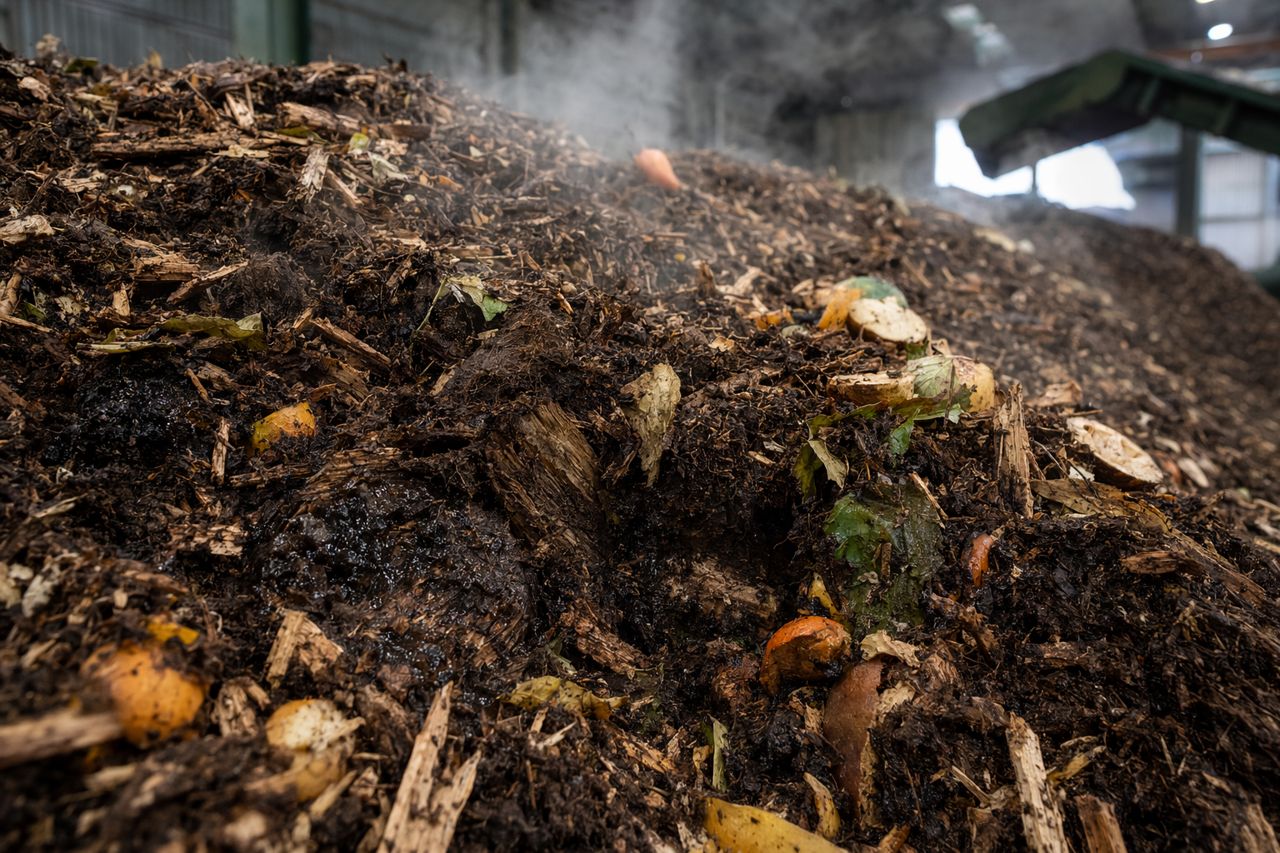
High moisture and poor structure limit airflow. Anaerobic pockets form inside the pile, especially when food waste, biosolids, manures, or sludgy material enter without enough bulking structure.
Operational signs:
- Slick or matted material
- Heavy loader buckets with little spring-back
- Dark wet zones during turning
- Sour or rotten odor released when the pile is opened
- Heat that spikes then collapses
Corrective focus:
- Increase structure and porosity
- Improve blending before pile formation
- Avoid burying wet loads in the center without amendment
- Recheck watering routines after rain events
2. Low oxygen from delayed turning or poor aeration
When oxygen demand outruns airflow, odor compounds build inside the pile and release sharply during disturbance. This is common in high-energy feedstocks and dense recipes.
Operational signs:
- Strong odor burst during turning
- Uneven steam release
- Dense core material
- Temperature variation between pile zones
- Slow recovery after turning
Corrective focus:
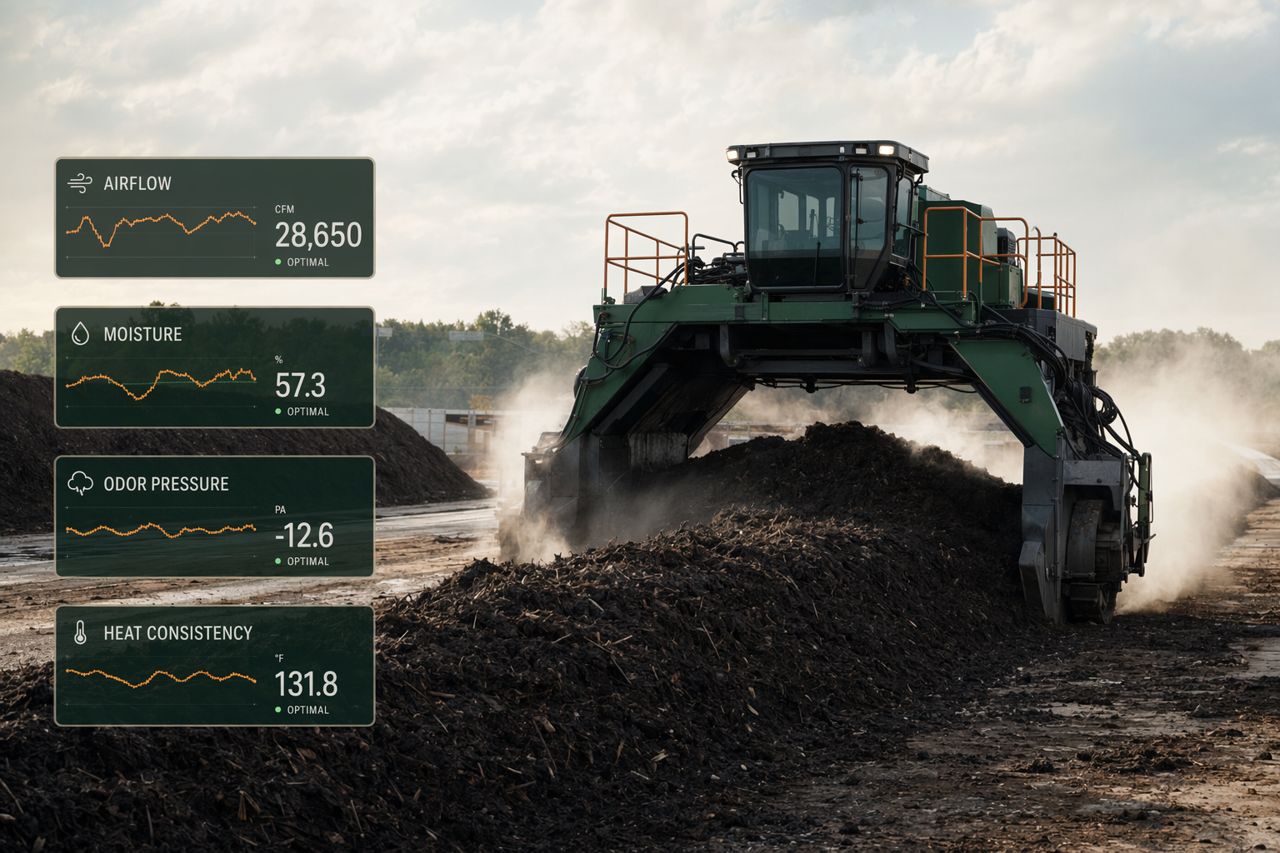
- Tighten turning schedules during peak decomposition
- Adjust pile size for better air movement
- Improve mix uniformity
- Confirm that aeration lanes or pads are not blocked, saturated, or channeling air poorly
3. Feedstock variability
Composting sites do not receive perfect recipes. Seasonal produce, food processing residues, yard waste surges, manure changes, and inbound contamination all shift the biology of the pile.
Operational signs:
- Odor events after specific suppliers or routes
- Hot spots in some rows, cold areas in others
- Extra wet material hidden under dry surface material
- Finished compost inconsistency
Corrective focus:
- Segment high-risk feedstocks on arrival
- Create recipe bands rather than one fixed recipe
- Use loaders and mixing zones to even out variability before windrow build
- Document which feedstocks correlate with odor pressure
4. Nitrogen imbalance and ammonia release
Ammonia odor often points to excess readily available nitrogen, elevated pH conditions, or heat and airflow patterns that push volatilization. Adding more material without balancing structure and carbon can make the problem worse.
Operational signs:
- Sharp ammonia odor near fresh or actively heating material
- Complaints after manure, food waste, or protein-rich inputs
- High heat with aggressive odor release
- Poor incorporation of carbon-heavy bulking agents
Corrective focus:
- Improve carbon distribution in the recipe
- Avoid surface exposure of nitrogen-rich loads
- Blend before heat accelerates the imbalance
- Manage moisture so the pile stays active without becoming saturated
Where Enzymes Fit — and Where They Do Not
Enzyme solutions are not a substitute for air, structure, moisture control, or disciplined pile management. If the pile is saturated and compacted, an additive cannot create the physical airflow the process needs.
Where a targeted compost enzyme program can help:
- Accelerating breakdown of mixed organic material once the pile environment is workable
- Helping facilities manage feedstock variability without overextending residence time
- Supporting more consistent heat development across batches
- Improving conversion of fibrous, starchy, fatty, or protein-rich fractions when they are part of the recipe
- Reducing the amount of partially degraded material that can carry odor risk downstream
The right question is not, “Will this product remove odor?” The better question is, “Can this enzyme program support the process controls that reduce odor formation?”
That distinction matters for facility managers, because complaints are operational events. They need operational fixes.
A Practical Odor Investigation Workflow
Step 1: Map the complaint window
Overlay complaints with wind direction, active work zones, turning times, receiving logs, and pile age. Look for repeatable triggers.
Step 2: Inspect the pile physically
Do not rely only on surface appearance. Open the pile and check moisture, compaction, matting, steam behavior, and odor release at the core.
Step 3: Review the recipe and receiving log
Identify high-moisture, high-nitrogen, fatty, or rapidly degradable loads. Check whether they were blended, capped, buried, or left staged too long.
Step 4: Correct the physical condition first
Adjust structure, moisture, pile geometry, turning schedule, and staging discipline. If the pile cannot breathe, the biology will not perform cleanly.
Step 5: Add process-support chemistry only where it serves the plan
A LoamForge enzyme recommendation should be matched to feedstock mix, process style, application point, and site objective. The goal is not a generic additive. The goal is better control under real facility conditions.
What Buyers Should Ask Before Choosing an Enzyme Supplier
When evaluating a compost enzyme supplier, facility teams should ask practical questions:
- Does the recommendation reflect our feedstock mix and seasonal variability?
- Where in our process should application happen: receiving, mixing, windrow build, turning, or moisture addition?
- How will success be evaluated: odor pressure, heat consistency, cycle time, screening rejects, or finished compost uniformity?
- Can the program support our existing equipment and labor pattern?
- Does the supplier understand compost operations, or only product specifications?
LoamForge focuses on the operating environment first. Enzyme selection follows the process map, not the other way around.
Facility Outcomes That Matter
For composting facilities, odor control is tied to broader performance:
- Fewer complaint-triggering process upsets
- More predictable heat profiles
- Better handling of variable inbound organics
- Faster stabilization where process conditions support it
- Reduced risk of wet, sour, under-processed pockets
- More uniform finished compost
- Stronger confidence during high-volume seasons
These outcomes depend on both site discipline and the right biological support.
Before You Buy: Run a Site-Specific Review
If odor complaints are increasing, do not start with a product list. Start with the pile behavior, feedstock pattern, and operating constraints.
LoamForge can help evaluate whether an enzyme program belongs in your correction plan and how it should be applied without disrupting your existing workflow.
Request a quote through the on-site form and share your feedstock mix, composting method, and current odor pressure. We will help you build a practical recommendation around your facility.