Reducing Screening Rejects in Green-Waste Composting Operations
Screening rejects are not just a finishing-line problem. They are a signal that the pile did not break down evenly enough, early enough, or consistently enough for the screen cut being used.
For a green-waste composting facility, high reject volume means more recirculation, more loader time, more pad space tied up in unfinished material, and more risk that woody, matted, or partially decomposed fractions keep moving through the same loop.
LoamForge supplies enzyme solutions built for organic waste processing sites that need tighter control over breakdown, heat behavior, odor pressure, and finished compost quality.
Why green-waste rejects climb
Green waste is rarely uniform. One week may bring wet grass and leaves. The next may bring dry brush, palm, pruning waste, shredded limbs, or storm debris. Even with good grinding and pile management, feedstock variability can create uneven decomposition.
Common reject drivers include:
- Woody oversize that stays structurally hard through the active phase
- Leaf mats and fibrous clumps that resist air and moisture penetration
- Dry pockets that do not carry microbial heat consistently
- Wet pockets that compact, turn anaerobic, and slow breakdown
- Inconsistent turning or blending caused by pad congestion or incoming volume spikes
- Screening too early because orders, space, or weather force the schedule
The screen only exposes the issue. The operational opportunity is upstream.
Where enzymes fit in the process
As a compost enzyme supplier for organic waste processing, LoamForge focuses on the early conditioning stage: the point where organic particles, moisture, oxygen, and microbial heat need to start working together.
A properly selected enzyme program can help soften and open up difficult organic fractions so the active composting biology can work more evenly. The goal is not to replace good composting practice. The goal is to make good practice more effective across variable feedstocks.
For green-waste operations, that can support:
- Faster conditioning of fibrous plant material
- More uniform heat development across the pile or windrow
- Reduced persistence of partially degraded clumps
- Less odor pressure from wet, compacted pockets
- Better screen yield at the target maturity window
- Lower reject recirculation volume when the site trial supports it
The reject loop costs more than it shows
Overs are often treated as normal. Some recirculation is expected in green-waste composting, especially when producing a consistent finished product. But when rejects climb, the cost spreads across the facility.
High reject rates can create:
- Extra loader and turner passes
- Higher fuel and labor demand
- Pad congestion from material that should have already cleared the process
- Longer residence time before saleable compost is ready
- More wear on screens, grinders, conveyors, and loaders
- More variability in finished compost appearance and texture
If the same woody and fibrous fractions keep returning to the front of the process, the operation is paying twice for material that should be progressing forward.
What to evaluate before changing the screen
Changing screen size can move the symptom, but it may not solve the cause. Before opening the screen cut or accepting more overs, review the process conditions that affect breakdown.
1. Incoming material consistency
Track the mix by visible category: brush, leaves, grass, pruning waste, wet organics, dry woody material, and contamination load. Rejects often rise when the feedstock blend shifts faster than the process recipe.
2. Grind profile
A grind that is too coarse can slow breakdown. A grind that is too fine can compact and restrict airflow. The best target is not always the smallest particle. It is the particle structure that lets moisture and air reach the material while maintaining pile porosity.
3. Moisture distribution
Overall moisture readings can look acceptable while dry cores and wet clumps remain inside the windrow. Uneven moisture is a major driver of uneven heat and uneven decomposition.
4. Heat consistency
Look beyond peak temperature. A pile that spikes hard in one zone and underperforms in another will usually produce inconsistent screen results. The more stable target is controlled heat across the working mass.
5. Turning impact
Turning should correct oxygen and moisture distribution, not simply move the same problem around the pad. If the turner is exposing persistent mats, hard woody chips, or sour wet pockets late in the cycle, the front-end conditioning step needs attention.
How a LoamForge enzyme program is typically applied
LoamForge programs are built around the facility’s actual feedstock, equipment, and process window. For green-waste composting, application is commonly evaluated at one of three points:
- At receiving or blending, where variable loads are first combined
- During moisture addition, when distribution can be improved across the mix
- At the first turn, when early heat behavior and pile structure are visible
The application plan depends on site conditions, water handling, pile format, target residence time, seasonal feedstock, and the reject profile observed at screening.
We do not ask operators to run a lab process on the pad. We focus on field controls that matter to the facility: pile behavior, screen yield, odor pressure, and finished product consistency.
Practical trial design for reducing rejects
A useful enzyme trial should be simple enough for the crew to run and clear enough for management to evaluate.
Recommended trial setup:
- Select comparable windrows or batches using similar incoming green waste.
- Keep grind, moisture target, turning schedule, and screen settings consistent between trial and control material.
- Apply the enzyme program at the agreed process point using the facility’s existing water or blending workflow where practical.
- Track operational indicators from build through screening.
- Compare reject volume, finished compost appearance, odor notes, and process time.
Useful site metrics include:
- Reject percentage or reject tonnage after screening
- Number of recirculation passes
- Loader hours tied to overs handling
- Days from build to screen-ready condition
- Temperature spread across the windrow
- Odor complaints, odor observations, or high-risk periods
- Finished compost texture, color, and visible stability
What success can look like
The best outcome is not a single number on a brochure. It is an operating pattern the facility can trust.
For a green-waste composting site, success may look like:
- The screen produces a cleaner finished fraction with fewer persistent fibrous clumps
- Overs volume becomes more predictable from week to week
- Recirculated material breaks down faster after re-entry
- Heat behavior is more even during the active phase
- Odor-prone pockets are reduced through better early conditioning
- The facility gains more control when feedstock quality swings
When rejects fall, the benefit reaches the whole site: less rework, better pad flow, more reliable finished compost supply, and fewer process surprises at the screen deck.
Faceless explainer video
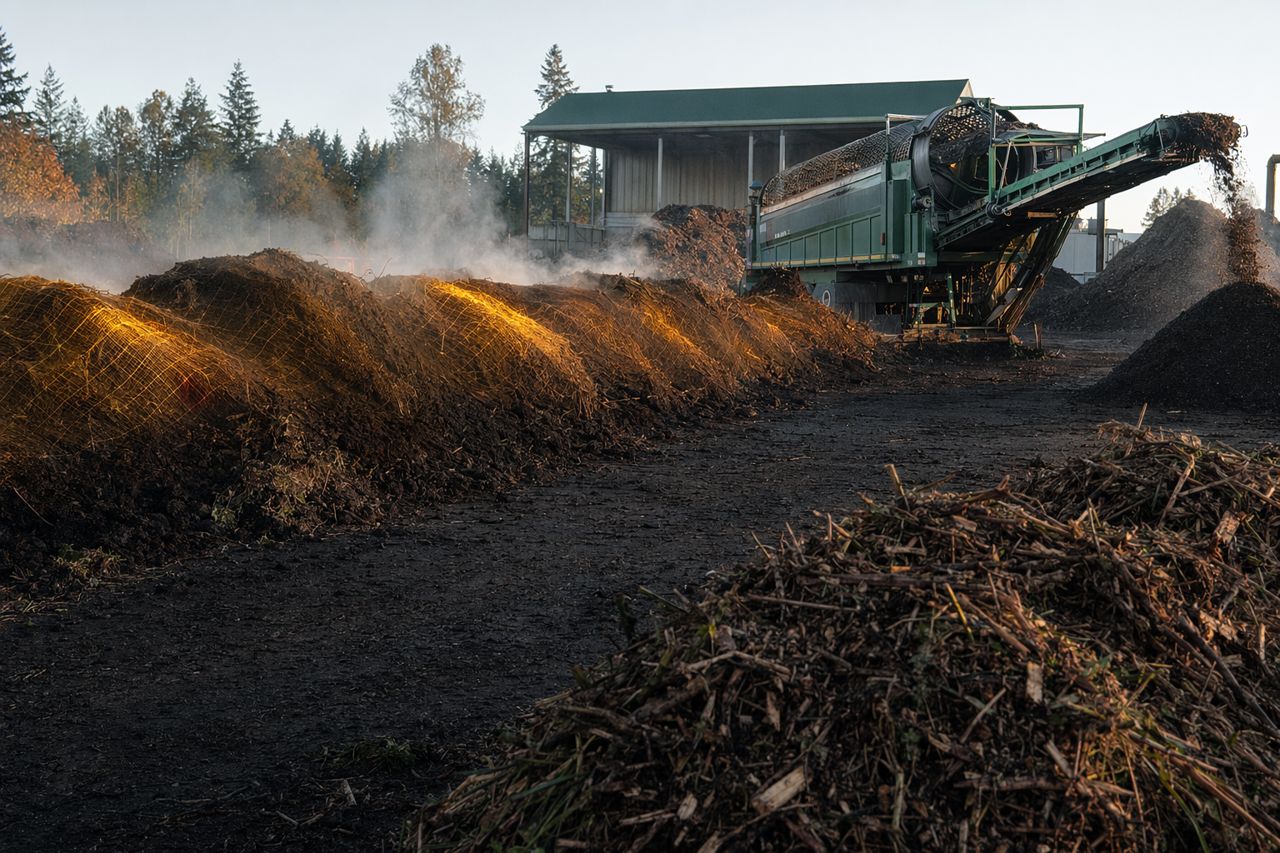
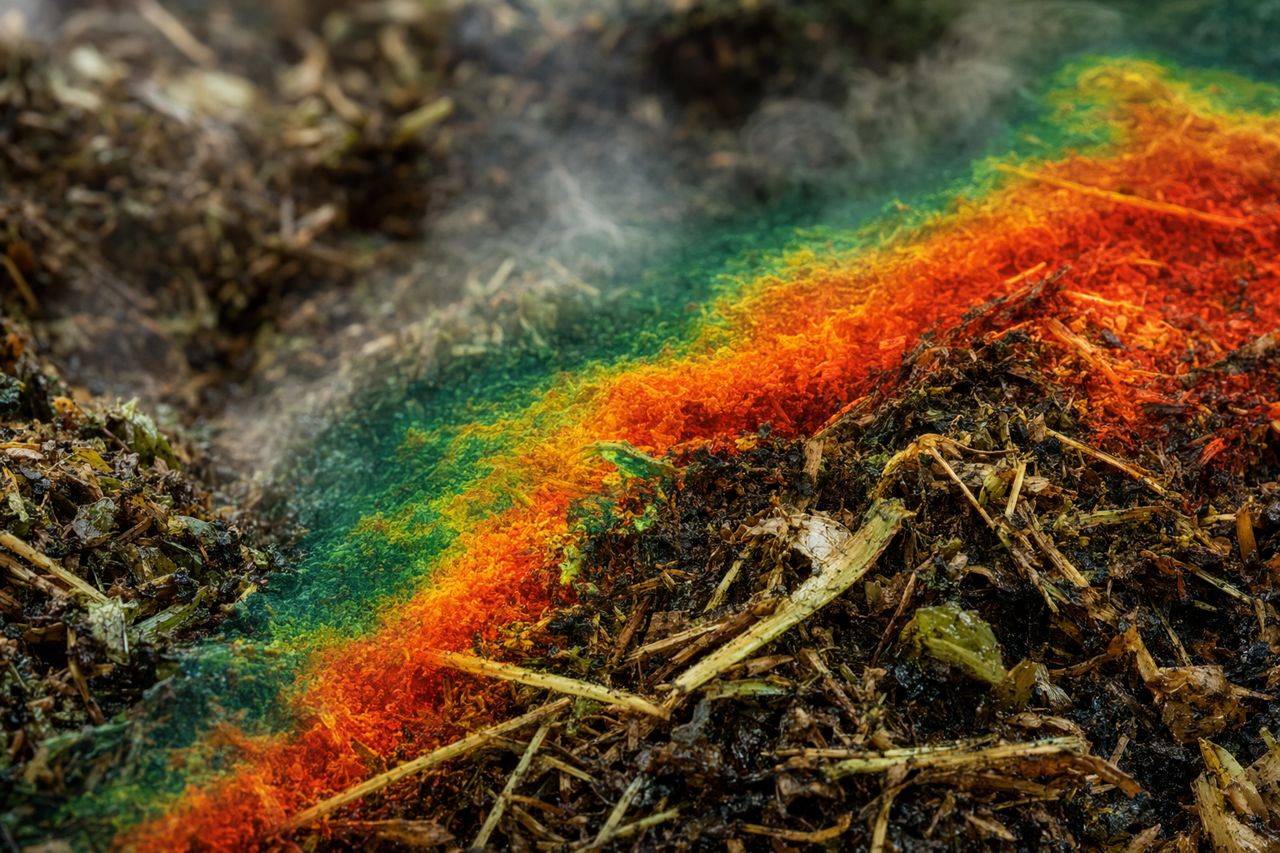
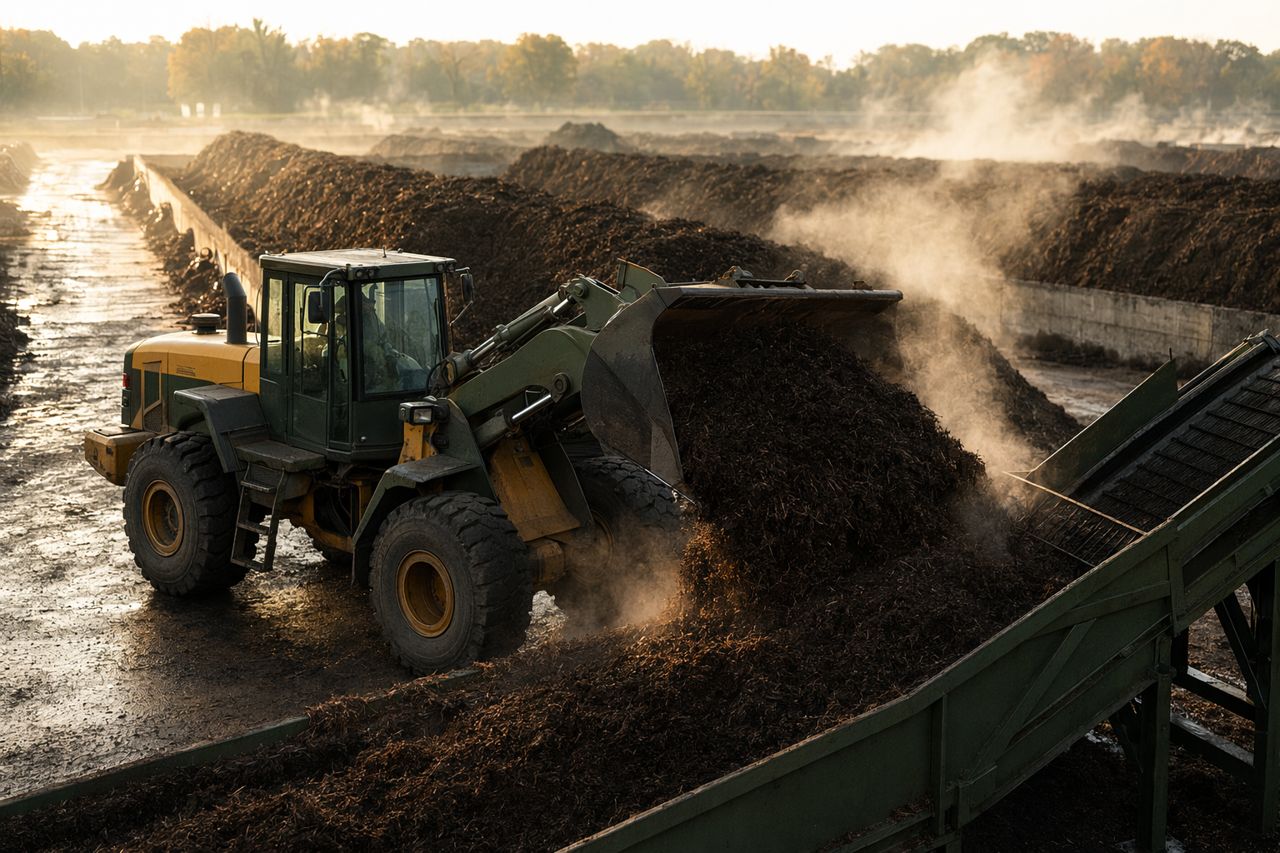
This page includes a one-minute faceless explainer showing green-waste windrows, screening overs, loader movement, particle breakdown, and thermal-gradient overlays. The video is designed for facility teams reviewing whether an enzyme-supported conditioning step fits their process.
Why LoamForge
LoamForge is built for composting facilities that need operational outcomes, not generic additive claims. We help evaluate the feedstock, process constraints, application point, and trial design before recommending a program.
You bring the site realities: incoming volume, weather, equipment limits, odor pressure, screen targets, and finished compost specifications.
We bring enzyme supply, practical implementation guidance, and a process-focused approach to improving organic waste breakdown.
Request a quote
If your facility is dealing with high green-waste screening rejects, LoamForge can review your process and recommend a site-specific enzyme program for trial.
Request a quote through the on-site form and include your feedstock mix, average throughput, screening setup, and the main reject issue you want to reduce.