Seasonal Green-Waste Surges: How Composting Facilities Keep Windrows Moving
Spring cleanups, storm debris, municipal collection peaks, landscape contractor dumps, and leaf-season overflow can all hit a composting facility at once. The problem is not just volume. Seasonal green waste changes moisture, particle structure, nitrogen balance, airflow, and odor pressure fast.
For a windrow operation, that means one question matters: can the pad keep material moving without creating wet, sour, slow-heating rows?
LoamForge supports composting facilities with enzyme solutions built for organic waste processing. As a compost enzyme supplier for organic waste processing, we focus on practical site outcomes: faster biological access to mixed feedstocks, more consistent heat development, better process control, and cleaner movement from intake to finished compost.
Why seasonal green waste strains windrow operations
Green waste looks simple from the gate, but seasonal loads are rarely consistent.
A facility may receive:
- Fresh grass clippings with high moisture and compaction risk
- Branches, brush, and woody debris with slower breakdown behavior
- Leaves that mat, shed water, or create airflow barriers
- Storm debris mixed with soil, bark, needles, and fine organics
- Landscape loads with uneven carbon-to-nitrogen behavior
- Municipal collections that arrive faster than the pad can stabilize
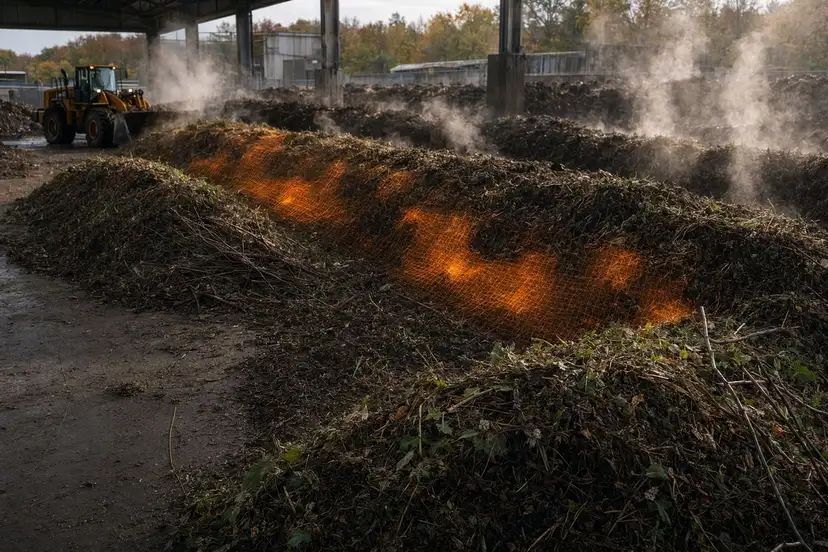
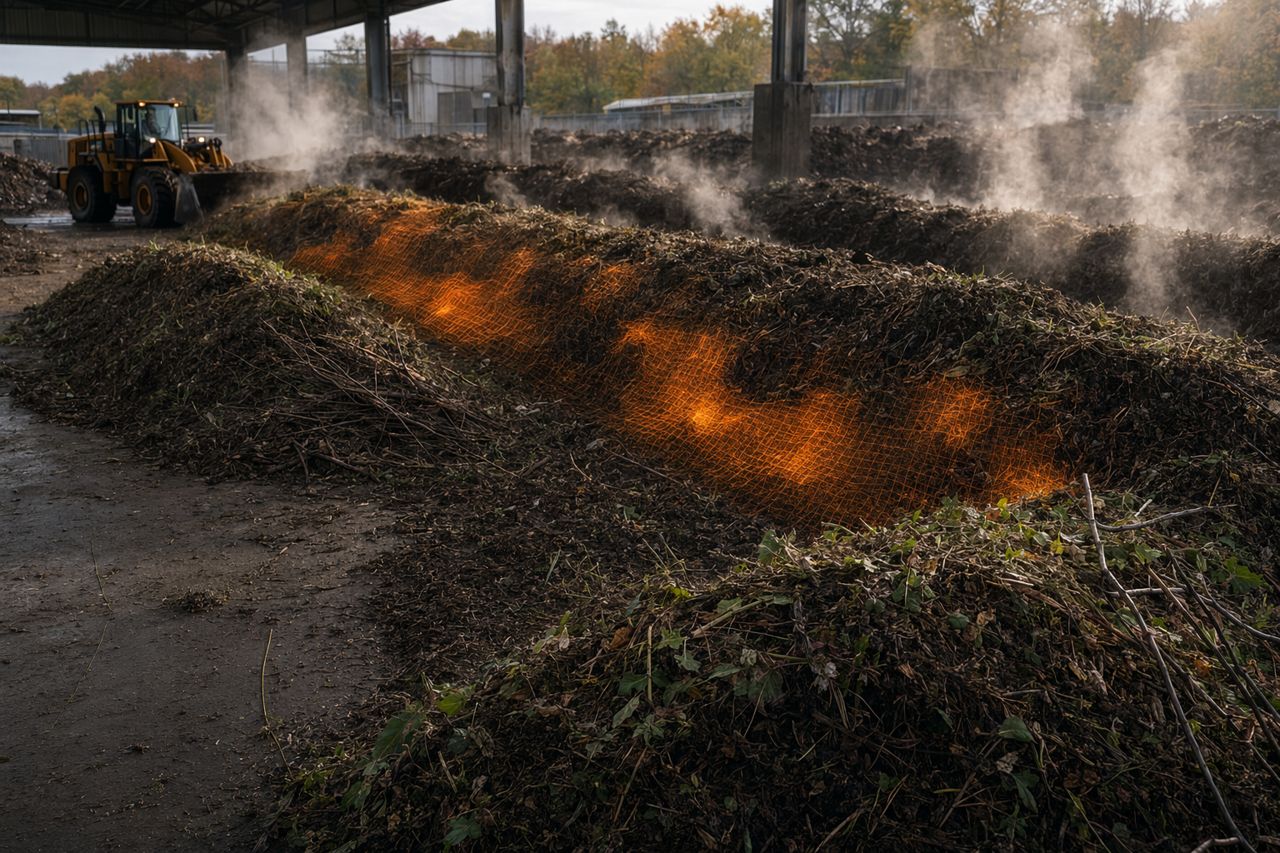
When those materials stack up, windrows can move from active and hot to uneven, wet, or odor-prone. Operators see it in the field: soft zones, low oxygen pockets, inconsistent steam, delayed temperature rise, leachate pressure, and rows that need extra turns just to recover.
The operational goal: keep biology accessible
Composting depends on microbial access. Seasonal green waste can block that access in several ways.
Fine, wet material packs down and restricts air. Woody material resists breakdown until surfaces open up. Leaves can mat into layers. Mixed loads create pockets that behave differently inside the same row.
LoamForge enzyme solutions are designed to help open more usable surface area across organic material types. In practical terms, that means the row has better conditions for microbial work, heat generation, and steady conversion.
This is not about replacing good composting practice. It is about reinforcing it when the feedstock mix gets difficult.
Where enzyme support fits in a windrow workflow
A facility still needs sound fundamentals: inspection, grinding strategy, moisture management, bulking structure, turning cadence, and temperature tracking. Enzyme support fits into that system as a process aid for high-variability organic inputs.
Common use points include:
- Incoming green-waste surges that need faster conditioning
- Mixed windrows with grass, leaves, brush, and fine organics
- Rows that show uneven heating after buildout
- Material with odor pressure from compaction or excess moisture
- Seasonal backlog where pad space and cycle time matter
- Rework material that needs a cleaner path back into active processing
For facility managers, the value is control. The more predictable the breakdown curve, the easier it is to plan loader time, turner passes, screening windows, and outbound compost commitments.
Heat consistency is a throughput issue
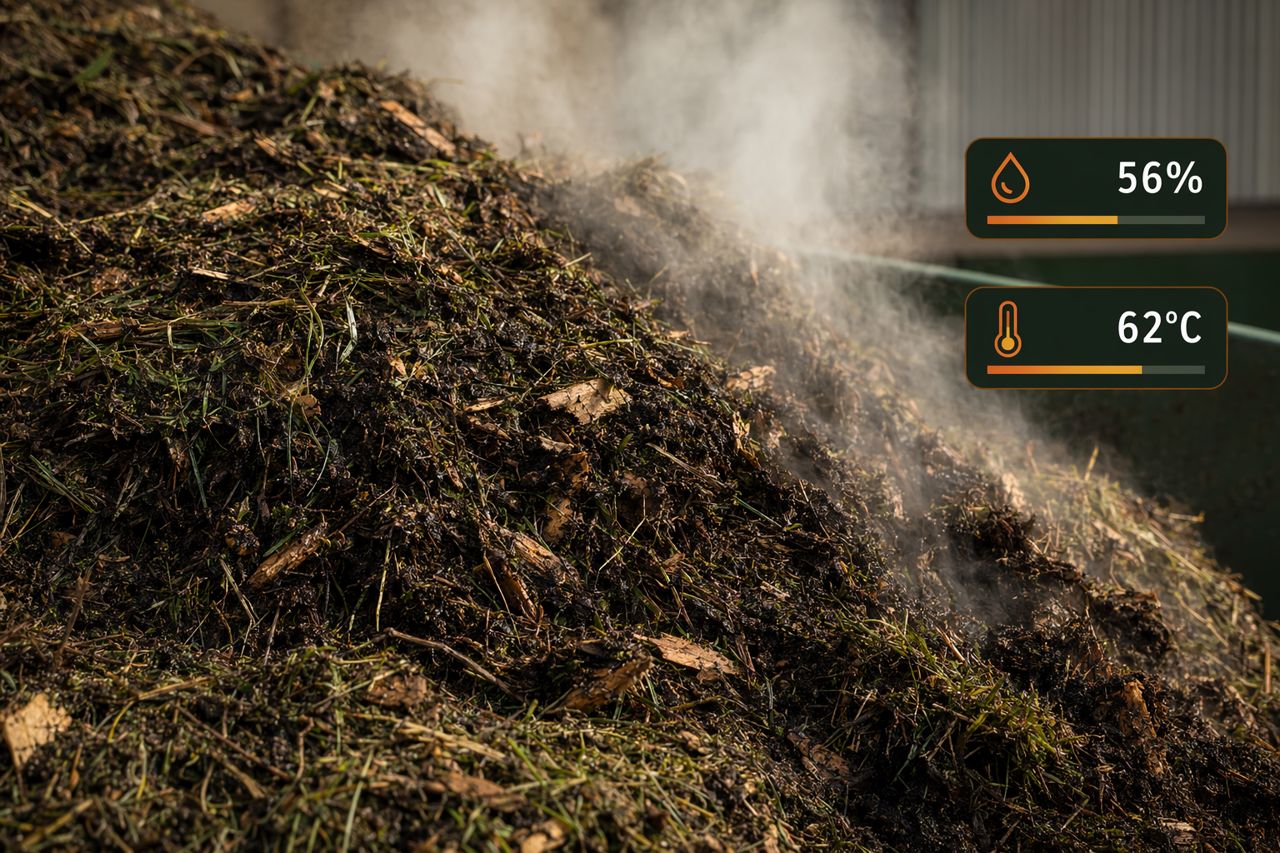
Heat is one of the clearest signs that a windrow is active, but inconsistent heat is a scheduling problem.
Cold pockets can extend cycle time. Hot streaks can mask poorly conditioned zones. Uneven rows may require added turning, remixing, or holding time before screening.
LoamForge helps facilities target a more uniform biological response across the pile. When organic particles are more accessible, the row has a better chance of building and maintaining heat across its profile. That supports more confident decisions on turning intervals, curing movement, and finished product timing.
Odor pressure starts before complaints arrive
Odor is often treated as a community issue, but it begins as a process signal.
During seasonal surges, odor risk rises when:
- Grass clippings arrive too wet
- Fine material seals off airflow
- Loads sit too long before blending
- Windrows are built without enough structure
- Anaerobic pockets develop inside heavy rows
Enzyme support can help by improving the breakdown path for difficult organic material before sour zones dominate. Used alongside correct moisture, structure, and turning, it gives operators another lever to keep the process aerobic, active, and controlled.
Feedstock variability is the real seasonal challenge
No facility manager needs a perfect theoretical pile. They need a practical process that can handle what actually comes across the scale.
That means a solution must tolerate variability:
- Wet Monday loads after a storm
- Dry brush-heavy loads in summer
- Leaf surges in fall
- Grass peaks during mowing season
- Mixed municipal and commercial deliveries in the same operating window
LoamForge products are selected and supplied for industrial composting conditions, where feedstocks shift and production targets do not wait. The objective is to help standardize biological performance when the input stream is anything but standard.
How to evaluate impact at the facility level
A composting facility does not need complicated lab language to decide whether a process aid is worth using. The right evaluation should focus on site metrics operators already track.
Consider monitoring:
- Time from row buildout to active heat development
- Temperature consistency across row sections
- Odor observations at receiving, turning, and active composting zones
- Moisture behavior and wet-pocket recovery
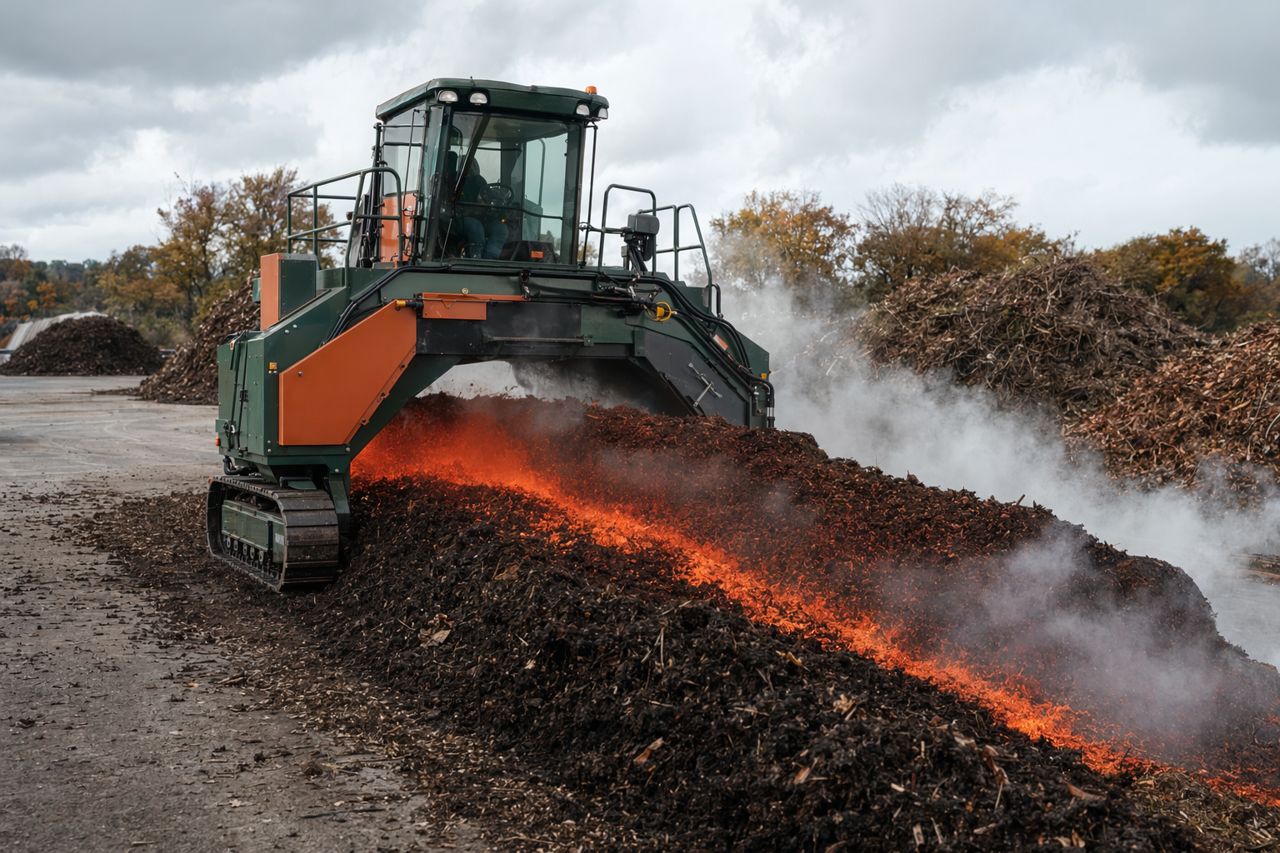
- Number of corrective turns or remix events
- Pad residence time before curing or screening
- Screenability and finished compost uniformity
- Rework percentage after screening
These are the indicators that affect labor, fuel, pad capacity, customer commitments, and complaint risk.
Practical deployment during peak green-waste season
The best time to plan for seasonal surges is before the gate gets crowded.
A practical readiness plan should include:
- Feedstock segmentation — separate high-moisture loads, woody loads, and leaf-heavy loads when possible.
- Blend discipline — build rows for airflow, not just volume absorption.
- Moisture checks — prevent wet compaction before it becomes odor pressure.
- Early treatment points — apply enzyme support where incoming material can be blended evenly.
- Thermal review — track heat rise and cold zones during the first active phase.
- Operator feedback — use loader, turner, and screening observations to adjust the approach.
LoamForge works with facilities to match enzyme selection and application planning to the material stream, processing style, and operational goals on site.
Finished compost quality depends on upstream control
Finished compost quality is not created at the screen. It is built through every intake, blend, turn, and curing decision before that point.
When seasonal green waste is controlled early, facilities can reduce slow pockets, improve uniformity, and support a cleaner finished product. That helps protect market value for landscape, soil amendment, erosion control, municipal, and agricultural buyers.
A steadier process also reduces the burden on operators. Fewer surprises in the row mean more predictable movement across the pad.
Built for facility managers, not theory
LoamForge is for composting operations that need rugged, practical support during real production conditions. We help facilities manage green-waste swings, stabilize active composting behavior, and protect throughput when seasonal pressure rises.
If your facility is preparing for a surge, expanding green-waste intake, or troubleshooting uneven windrow performance, we can help define a practical enzyme supply plan for your process.
Request a quote
Tell us about your feedstocks, windrow process, seasonal volumes, and operating goals. LoamForge will help you identify the right enzyme approach for your composting facility.
Request a quote